1300 367 412




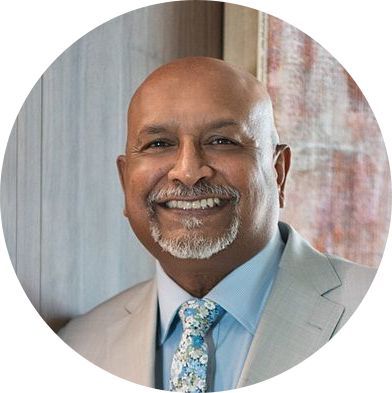
- Key figure: Deven Pillay, Sales Agent at McGrath Leichhardt, known for a digital-first, process-driven approach to residential sales with a long background in marketing and advertising
- Challenge: Rebuilding trust in an industry often criticised for its outdated, opaque transaction process while standing out in Sydney’s competitive Inner West market
- Solution: Digital-first approach through Realtair to deliver transparent, efficient, and secure transactions that rebuild client confidence
- Key achievement: Built entire practice on digital processes (only 1 manual exchange in his career), turning client surprise into glowing testimonials and creating a competitive edge over veteran colleagues

The door closes. Not slammed exactly, but firm enough to send a message. It’s a weeknight in Petersham, and Deven Pillay is doing what he does several evenings a week: knocking on doors, introducing himself, building his network. Rejection is part of the process, but so is his persistence.
But across Sydney’s Inner West, something different is happening. A prospect opens the Market Update Deven sent last week. Then opens it again the next day. And again, two days later. By the fourth time, Deven knows they’re genuinely interested. When he calls, they’re ready to talk.
One time, he closed an exchange in half a day. The vendor texted him afterwards: “Thanks for everything, Deven, you made it easy.” When she came to the office to pay the deposit, she couldn’t stop talking about how simple the process had been. She’d expected the old routine of signing physical contracts, waiting for them to be couriered, crossing fingers that nothing got lost in the post. Instead, everything happened electronically through Realtair’s platform. Done in hours, not days.
“She was like, perfect, this is fantastic,” Deven recalls.
For Deven, these moments are proof that real estate’s trust problem can be solved, one digital exchange at a time.
The trust problem that nobody wants to talk about
When Deven Pillay left his career in print to enter real estate, he knew the basic sales skills would transfer. His advertising background would help with marketing properties. Building a client base would take time. What he didn’t anticipate was the hostility.
“What I didn’t realise before was the amount of vitriol directed at agents,” he recalls. Real estate professionals, he discovered, rank just above used car salespeople in public trustworthiness. “That shocked me. They say we’re just above used car agents, you know, kind of at the bottom of the rung. And that really shocked me because I was maybe a bit naive.”
The old manual processes didn’t help. Contracts sent through the mail could be delayed or lost. Physical signatures required coordination across multiple parties, often stretched over days or weeks. Each delay created another opportunity for anxiety, another reason to wonder if something had gone wrong. The opacity of the process bred suspicion.
Meanwhile, the market has evolved faster than many agents have adapted. “Buyers are savvy,” Deven observes. “They’re doing their homework before they come to an open home. They’re not coming there without knowing where the property sits in the market.”
The role of the agent is shifting as a result. “I think the role of the real estate agent is going to evolve,” Deven predicts. “We are going to become more customer-focused as opposed to just money-oriented, and how much I can get from this deal. It’s going to be more about looking at your needs and matching it to what’s out there.”
A different foundation
At McGrath, Deven found something that aligned with how he wanted to work. “When I first went, and I met John McGrath, and I heard what he had to say, the first thing he mentioned was ethics and being honest and being an honest broker in real estate,” Deven says. “It resonated with me. And I thought, this is where I fit in. This is my place.”
McGrath also backed it up with structure. “The support we’re given, the amount of support to succeed, to do well, to list properties, to connect with your network. It’s just a natural fit for me.”
Deven’s previous career had taught him about building profiles, presenting professionally, and managing client relationships. But those skills needed the right infrastructure to work properly in real estate. “There are systems, there are processes in place, and if you follow it, it’s very hard for you to fall behind,” he explains.
But support only takes you so far. What Deven needed was tools that would let him operate at the same level as veterans with decades of experience. “I’m up against guys who’ve been in the industry for 20 to 30 years. I’m three years,” he says. “But I’m not fazed by it. I’m very determined, and what I don’t have in years and experience, I make up for in other ways.”
Those other ways started with a decision he made early: go digital from day one.

"What I don't have in years and experience, I make up in other ways... using Realtair gives me the edge."
From suspicion to “you made it easy”
The text message arrived after Deven closed an exchange one Friday. He pulls it up to read it word for word: “Thanks for everything, Devin, you made it easy.”
The vendor had come to the office expecting the traditional routine: signing physical contracts, waiting for them to be posted to solicitors, coordinating across multiple parties over days or weeks. Instead, the entire exchange was completed in half a day through Realtair Sign.
“When she came to the office, she paid the deposit and she said, Deven, I realised this is so easy,” he recalls. Her surprise was genuine. She’d been bracing for complexity and delay.
“I said, no, we use Realtair. It’s so easy and they do everything for you. So, there’s no more running around and coming to an office and signing a contract. We can do it all online. And she was like, perfect, this is fantastic.”
The simplicity impressed her enough that when Deven asked for a testimonial, she agreed immediately and provided a glowing one.
Across his three years using Realtair, Deven has processed nearly all his exchanges digitally. “I think in all the exchanges I’ve been involved in, I’ve only done one manual physical copy. The rest has been Realtair.”
The speed changes client interactions fundamentally. The exchange that finished in half a day would have taken significantly longer using traditional methods. “A couple of minutes, and it’s already in their inbox,” Deven notes. That immediacy removes the anxiety that comes with waiting, wondering if documents have been received, whether signatures match, if something got lost in transit.
That surprise consistently converts to satisfaction. When clients experience transactions that are faster, clearer, and less stressful than they expected, their perception of the agent shifts.

Safety and security as trust pillars
For Deven, security isn’t separate from efficiency. It’s what makes efficiency trustworthy. “It’s very safe. Realtair is very safe and it does all the hard work for you,” he explains. The platform automates the tedious parts of transactions while maintaining security protocols that would be difficult for individual agents to implement consistently with manual processes.
Digital contracts can’t be lost in the post. There’s no risk of documents sitting in the wrong mailbox or getting damaged in transit. Every step of the exchange is documented and timestamped. Both parties can see exactly where things stand at any moment.
When Deven explains the technology to clients, he emphasises these safeguards. He knows how to present complex systems in ways that build confidence rather than create anxiety. “If an agent explains the steps, works at your pace and explains the technology,” clients respond positively.
More time for what matters
The efficiency Realtair provides creates something more valuable than convenient transactions. It changes how Deven spends his working hours.
For a relatively new agent competing against veterans with 20 and 30 years of experience, that time advantage matters enormously. Deven can’t rely on decades of accumulated contacts or longstanding client relationships. He needs to build his database from scratch, and he does it the traditional way: door knocking, letterbox drops, open homes, online enquiries.
“I do a lot of prospecting. I do a lot of door knocking. I do a lot of letterbox drops,” he explains. Every person who attends an inspection, every online enquiry, every brief conversation at a door goes into his database. It’s methodical work that requires consistency.
But building a database is only half the challenge. Knowing who to follow up with and when is what converts contacts into clients. This is where Realtair’s Market Update feature becomes strategic rather than just convenient.
“I love the Market Updates,” Deven says. “I really like that feature where you can set a task every three months to send out the Market Update.” The platform reminds him when it’s time, keeping him consistent without requiring manual tracking. But the real value is in what happens after he sends them.
“Every time someone opens it, you can put a time limit on it as well,” he explains. The tracking shows not just whether someone opened the update, but how many times. “If they’ve opened it about three or four times, they’re interested. So, you know that’s when you want to engage more with them.”

The industry evolution
Deven sees the shift coming, whether individual agents embrace it or not. The question isn’t if real estate will go digital, but who will adapt quickly enough to stay competitive. “I think if you’re not adapting technology into your processes now, especially with the way the world is going, you will eventually fall behind,” he says.
The old model relied partly on information asymmetry. Agents knew things buyers and vendors didn’t. They controlled access to data, to comparable sales, to market insights. Technology has demolished all that. Buyers research extensively before attending opens. Vendors can track sales in their street on their phones. The gatekeeping function has evaporated.
What remains is the human element: negotiation, emotional intelligence, local knowledge, relationship management. But delivering those effectively requires removing the friction from everything else. “Those days of signing physical contracts are over,” Deven states flatly. “Solicitors don’t want it, they all want it to be in electronic format. So why would you do it any other way?”
“We can change the perception. We can do it now,” he insists when discussing the industry’s trust problem. Technology is part of that solution because it enforces transparency. Timestamps, documented exchanges, and tracked communications are all built into Realtair.
For Deven, rebuilding trust isn’t a philosophical exercise that lives separately from daily work. It’s embedded in the tools he uses and the processes he follows. Every efficient exchange, every transparent transaction, every client who texts “you made it easy” is evidence that a different kind of real estate practice is possible.